Home / Blog / Can Liposuction Remove Belly Fat Permanently? What Happens if You Gain Weight Again?
Can Liposuction Remove Belly Fat Permanently? What Happens if You Gain Weight Again?
October 9, 2026
Written by: Dr. Vikesh Vij Editorial Team Medically reviewed by: Dr. Vikesh Vij
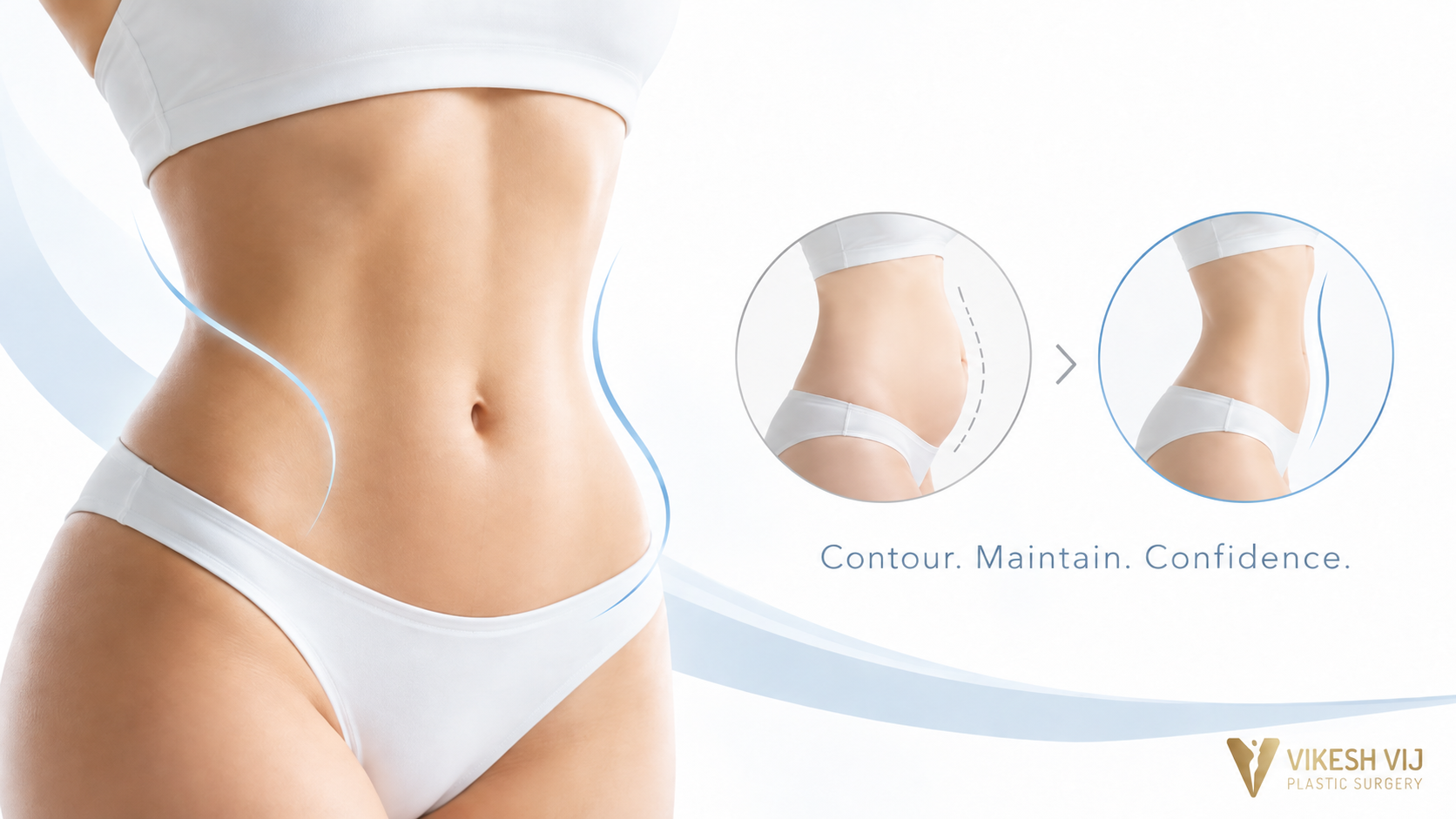
Stubborn belly fat is one of the most common reasons patients consider liposuction in Dubai. Almost every consultation also includes the same question: if the fat comes out, can it come back? The short answer is that liposuction permanently removes the fat cells it targets. But your long-term results still depend on what happens to your weight afterwards. Here is what you need to know.
Does Liposuction Remove Belly Fat Permanently?
Yes, for the fat cells that are removed. During liposuction, the surgeon suctions out fat cells (adipocytes) from the treated area. Once those cells are gone, they do not grow back or regenerate.
However, liposuction does not remove every fat cell in your abdomen. A thin, even layer is intentionally left behind so the contour stays smooth and natural. Those remaining cells are still active, and they can still respond to changes in your weight.
Liposuction Is Body Contouring, Not Weight Loss
Liposuction is designed to reshape pockets of fat that resist diet and exercise. It is not a way to reduce your overall body weight. The best candidates for liposuction are already at or close to a stable, healthy weight.
If your main concern is loose skin or separated abdominal muscles, a tummy tuck may suit you better. Our guide on tummy tuck vs. liposuction explains the difference.
What Happens if You Gain Weight After Liposuction?
Your body still stores extra energy as fat after surgery. If you consistently eat more calories than you burn, your results can change in four ways.
The Remaining Fat Cells Can Grow Larger
The fat cells left in your abdomen can still expand. Because there are fewer of them, the treated area usually changes less than before. It can, however, lose some of its definition.
Fat May Build Up in Untreated Areas
With fewer fat cells in your belly, significant weight gain often shows up elsewhere first. Common areas include the arms, thighs, back, flanks, and chest. This is why some patients notice a change in proportions rather than a return of belly fat.
Visceral Fat Is Not Affected
Liposuction only removes subcutaneous fat, which sits just beneath the skin. It does not touch visceral fat, the deeper fat around your internal organs. Visceral fat can still increase with weight gain, and only diet and exercise reduce it.
Large Weight Gain Can Make Contours Uneven
Small weight fluctuations tend to stay evenly distributed. Substantial gain, generally around 10% or more of your body weight, can lead to an uneven or disproportionate shape, according to the American Society of Plastic Surgeons.
How to Keep Your Liposuction Results Long Term?
The best way to protect your new contour is to keep your weight stable. These habits help:
- Eat a balanced diet: Our guide on what to eat after liposuction covers healing and long-term maintenance.
- Stay active: Return to regular exercise once your surgeon clears you.
- Follow your aftercare plan: Wearing the right compression garment after liposuction supports a smooth result.
- Plan around big life changes: If you expect a pregnancy or major weight loss, discuss timing at your consultation.
Is Liposuction Right for Your Belly?
Liposuction can permanently reduce stubborn belly fat, as long as you maintain your weight afterwards. Dr. Vikesh Vij is a board-certified plastic surgeon in Dubai who creates a personalized plan around your body and goals. He also offers liposuction for men and other body contouring procedures.
Book a consultation at our JBR clinic to find out whether liposuction is the right choice for you.
Related Blogs

Types of Breast Lift: Crescent, Donut, Lollipop and Anchor Compared

Breast Augmentation Myths: Is a Boob Job Worth It?

Surgical vs. Non-Surgical Eyelid Procedures: What You Need to Know

Breast Reduction vs Breast Lift: Which Procedure is Right for You?