Home / Blog / Can Breast Augmentation Correct Uneven Breasts?
Can Breast Augmentation Correct Uneven Breasts?
November 26, 2026
Written by: Dr. Vikesh Vij Editorial Team Medically reviewed by: Dr. Vikesh Vij
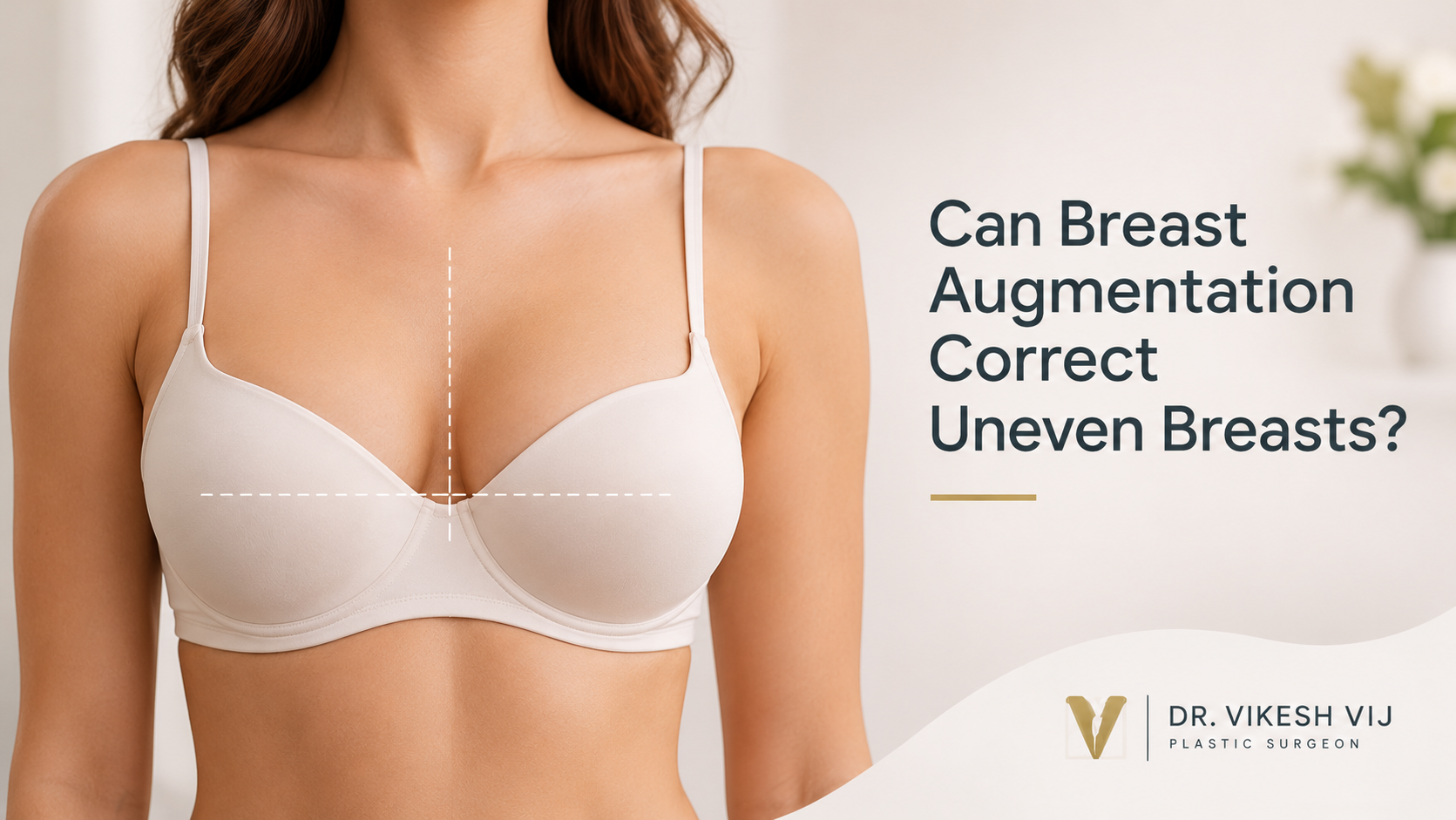
Yes, breast augmentation can correct uneven breasts by adding volume to the smaller breast or using implants of different sizes to improve the balance between both breasts. However, when the difference involves breast shape, nipple position or sagging rather than size alone, a breast lift or another corrective procedure may also be needed.
Having one breast slightly larger than the other is perfectly normal. For some women, though, the difference is noticeable enough to affect how their clothes fit, how comfortable they feel wearing certain bras or how they feel about their appearance.
Understanding what causes the difference is the first step towards finding the right treatment.
Why Is One Breast Bigger Than the Other?
Uneven breasts, medically known as breast asymmetry, occur when the breasts differ in size, shape or position.
The difference may have been present since puberty or developed later in life. Common causes include:
- Genetics: Natural differences in breast development can run in families.
- Hormonal changes: Puberty, pregnancy and menopause can affect breast size and shape differently on each side.
- Pregnancy and breastfeeding: One breast may lose more volume or develop more loose skin than the other.
- Weight fluctuations: Significant weight loss or gain can change the size and shape of the breasts unevenly.
- Previous breast surgery or injury: Changes to breast tissue following an operation or injury may result in asymmetry.
Although longstanding breast asymmetry is common, a sudden or unexplained change in breast size or shape should be medically assessed. The NHS recommends seeking medical advice if you notice unusual breast changes, lumps, persistent pain or nipple discharge.
How Does Breast Augmentation Correct Uneven Breasts?
When one breast has less volume than the other, breast augmentation can help reduce that difference. Depending on your anatomy and desired breast size, your surgeon may recommend one of the following approaches.
Using Different-Sized Breast Implants
If both breasts need additional volume, a larger implant may be placed in the smaller breast and a smaller implant in the larger breast.
Implant selection is not based on size alone. Your surgeon also considers breast width, existing tissue, skin elasticity and the shape of your chest. Two implants with different volumes may be needed to create a more balanced appearance.
Correcting Breast Asymmetry With Fat Transfer
Not every patient wants breast implants. Breast fat transfer uses fat collected from another area of your body, such as the abdomen or thighs, to add volume to the breast.
This can be an option for patients with mild to moderate differences who have sufficient donor fat. Some of the transferred fat is naturally absorbed by the body, so additional treatment may be necessary.
Is Breast Augmentation Always Enough to Fix Uneven Breasts?
No. Breast augmentation primarily addresses differences in volume. If one breast sits lower than the other or has significantly more loose skin, adding volume alone may not achieve the desired balance.
The American Society of Plastic Surgeons identifies several surgical options for breast asymmetry correction, including implants, fat grafting, breast lifts and breast reduction.
| Type of Breast Asymmetry | Possible Treatment |
| One breast is smaller than the other | Breast implants or fat transfer |
| Both breasts lack volume but differ in size | Different-sized breast implants |
| One breast sits lower than the other | Breast lift |
| One breast is significantly larger | Breast reduction |
| Uneven size combined with sagging | Breast lift with implants |
A breast lift can improve differences in breast position and shape, while breast reduction surgery may be more suitable for women who would prefer to reduce the larger breast instead of enlarging the smaller one.
In some cases, a breast lift with implants can address both concerns during the same operation.
Can Surgery Make Both Breasts Exactly the Same?
Breast asymmetry surgery can significantly improve the balance between both breasts, but perfect symmetry cannot be guaranteed.
Natural differences in the chest wall, breast tissue, nipple position and skin quality can influence the final result. Pregnancy, ageing and future weight changes may also affect breast symmetry after surgery.
The aim is to achieve breasts that look more balanced and proportionate to your body, rather than making them identical.
Who Is a Good Candidate for Breast Asymmetry Correction?
You may be a suitable candidate for breast asymmetry surgery if:
- Your breasts are fully developed.
- Your breast size and body weight are relatively stable.
- You are in good general health.
- The difference in breast size or shape concerns you.
- You have realistic expectations about what surgery can achieve.
If you are currently pregnant, breastfeeding or planning significant weight loss, your surgeon may recommend postponing treatment until your breast size has stabilised.
It is also worth remembering that mild breast asymmetry does not require treatment unless it is something you personally wish to address.
Are There Any Risks of Breast Asymmetry Surgery?
As with any operation, breast asymmetry correction carries risks. These may include infection, bleeding, scarring, changes in nipple sensation and some remaining asymmetry.
Patients choosing implants should also understand the possibility of implant rupture, movement and capsular contracture, which occurs when scar tissue tightens around an implant. Rare implant-associated cancers are another risk that should be discussed during a consultation.
According to the US Food and Drug Administration (FDA), breast implants are not lifetime devices and may require removal or replacement in the future. Regular follow-up and appropriate implant monitoring are important.
Your surgeon will explain the risks associated with your particular treatment before you decide whether to proceed.
Breast Asymmetry Correction in Dubai With Dr. Vikesh Vij
Correcting uneven breasts requires more than simply choosing two implant sizes. The position, shape and natural structure of each breast need to be considered individually.
Dr. Vikesh Vij is a board-certified plastic surgeon in Dubai offering a range of breast surgery procedures. During a consultation, he can assess the differences between your breasts and discuss whether implants, fat transfer, a breast lift or a combination of procedures would be appropriate for you.
If you are considering breast augmentation in Dubai to address uneven breasts, you can book a consultation with Dr. Vikesh Vij at his JBR clinic to discuss your options.
Frequently Asked Questions
Can I get two different-sized breast implants?
Yes. Plastic surgeons may use implants of different sizes when there is a noticeable difference in natural breast volume. The implant dimensions are selected according to your individual anatomy and desired outcome.
Can uneven breasts be corrected without implants?
Yes. Fat transfer, breast reduction or a breast lift may be suitable alternatives, depending on whether the difference involves volume, size or breast position.
Is it normal for breasts to look uneven after augmentation?
Some temporary unevenness can occur during recovery because swelling and implant settling may differ between sides. Persistent asymmetry, sudden swelling or increasing pain should be assessed by your surgeon.
Will breast asymmetry come back after surgery?
Breast symmetry can change over time due to pregnancy, breastfeeding, ageing and weight fluctuations. Surgery can provide lasting improvement, but it cannot prevent future changes in breast tissue.
How much does breast asymmetry correction cost in Dubai?
The cost depends on the procedure required, whether one or both breasts need treatment, implant selection, hospital charges and anaesthesia fees. An accurate quotation can be provided following an individual assessment.
Related Blogs
Natural-Looking Breast Augmentation in Dubai: How to Choose the Right Implant Size
Arm Lift vs. Arm Liposuction After Weight Loss; Which Is Right for You?

How to Choose a Plastic Surgeon in Dubai: Qualifications, Safety and Questions to Ask
Can Liposuction Remove Belly Fat Permanently? What Happens if You Gain Weight Again?